

Recently, the headphone industry has made monumental strides, greatly expanding the capabilities of small-form factor sound drivers and active noise cancellation (ANC). This year, the industry continues finding ways to innovate as consumers have started to reveal a new affinity for open-ear headphones.
You’re probably already familiar with more standard headphone types such as in-ear earbuds like AirPods, or over-ear headphones like Sony’s renowned WH lineup. Unlike the two, open-ear headphones aim to deliver sound to your ears without an enclosure. Traditional earbuds rely on silicone tips and foam cushions to create a seal, preventing sound leakage but sacrificing awareness.
With wireless earbuds becoming the gold standard for music listening, especially for running outdoors, this drawback is a dealbreaker for some. Runners want to be able to hear their surroundings when navigating traffic or crowded areas. While several premium in-ears offer transparency modes that artificially improve ambient pass-through, they can often miss or filter out certain types of sounds. Also, the feeling of having something squished into your ear canal isn’t for everybody.
The obvious answer to these concerns is removing the enclosure. Sound could pass through easily and the sweat buildup would be substantially reduced. However, doing so defeats the entire purpose of earbuds–to take your quirky music taste to your grave.
One approach to this issue is called bone conduction. Take the Shokz OPENRUN PRO 2, a popular pair of athletic, open-ear headphones released in late 2024. These headphones use transducers to convert waveforms into extremely precise mechanical vibrations that get transmitted directly through your skull. This allows vibrations to stimulate the cochlea directly. Many individuals with partial hearing issues are able to hear with these headphones extremely well as a result.
To supplement the listening experience, the OPENRUNs also have air-facing drivers that are aimed at the ear canal. This type of sound transmission is called air conduction, and is used in virtually every single type of headphone. As you would imagine, sound is pushed through the air into the ear canal, where the eardrum converts the sound waves into mechanical vibrations. The difference with this design, however, is that the driver is placed significantly further away from the ear canal than on in-ear earbuds. This is only permissible because their purpose is to accentuate lower, bass frequencies that can sound muddier through bone conduction.
Recently, I bought myself a pair of open-ear headphones released around the same time as the OPENRUNs. The Soundcore AeroFit 2s use air conduction exclusively. As a result, Soundcore couldn’t afford to make the same design choices as Shokz. The drivers on these earbuds are placed directly in front of the ear canal, which is necessary to deliver a louder, fuller sound profile with minimal leakage. Of course, there is still a gap between the ear canal and the driver, preserving the open-ear benefits.
Running with these earbuds was an enlightening experience. No more sweat. No more uncomfortable pressure buildup. And the best part–they sounded phenomenal for what they were. Still, I was bothered by the loud whirring of the treadmill beneath me. At CES 2026, Soundcore announced the Pro model of these earbuds. As I looked through the specsheet, one feature stood out to me: ANC. I was astounded. Wearing the previous model, I wondered, how could they possibly have ANC without a seal?
ANC works by recording and inverting ambient sound waves through a microphone to cancel out the sound using destructive interference. Because ANC systems are never perfectly accurate, reducing the amplitude of incoming noise through a seal makes any phase-cancellation errors far less noticeable.
But upon further research, I realized that Soundcore thought of this. The regular model of these earbuds allows the user to adjust the position of the driver via a four-stage lever. While the feature was initially intended for comfort purposes, Soundcore repurposed the closest position to barely create a seal against the ear canal. While many users have reported the ANC to be mediocre at best, the fact that it can even exist on a pair of open-ear earbuds makes me excited to see how the format evolves as it becomes increasingly popular.
Sources
Liszewski, Andrew. “Anker’s AeroFit 2 pro Can Be Worn as Open-Ear Headphones or ANC Earbuds.” The Verge, 5 Jan. 2026, www.theverge.com/tech/852887/anker-soundcore-aerofit-2-pro-sleep-a30-special-boom-go-3i-bluetooth-headphones-earbuds-speaker. Accessed 7 Feb. 2026.
Bose. “Air Conduction vs. Bone Conduction: Open-Ear Audio Guide.” Bose.com, Bose Corp, 22 Apr. 2024, www.bose.com/stories/air-conduction-vs-bone-conduction?srsltid=AfmBOorOqLZAvqrVsUgHfYhOmu-suLadDea7gV3z0AsNtyWjOyaDQkr3. Accessed 7 Feb. 2026.
Elio Struyf. “Reviewing the Shokz OpenRun pro 2 for Cyclists.” Elio Struyf, 14 Apr. 2025, www.eliostruyf.com/reviewing-shokz-openrun-pro-2-cyclists/. Accessed 7 Feb. 2026.
Enjoyed this piece? Support the author and share it.
More Stories

The Transition to Autonomous Vehicles
Around the world and increasingly in US cities, autonomous vehicles (AVs) are slowly starting to expand into more and mo...
By Stavro Kakouras
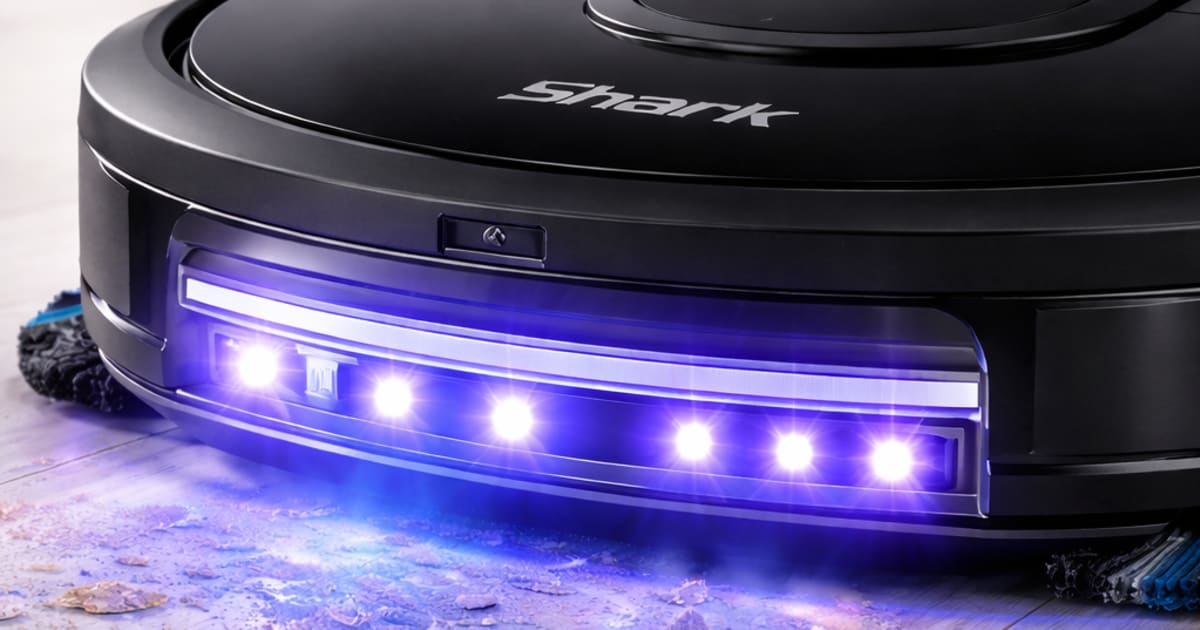
The Newest Shark Vacuum Shines a Light On Dirty Floors
Only a few hours ago, Shark announced the release of its newest robot vacuum. This isn't another regular fully-automatic...
By Stavro Kakouras

The Extended Partnership Between Dell AI and McLaren Racing
In a sport as competitive as F1, driving skills cannot stand alone; the use of advanced technologies is a major driving ...
By Stavro Kakouras