
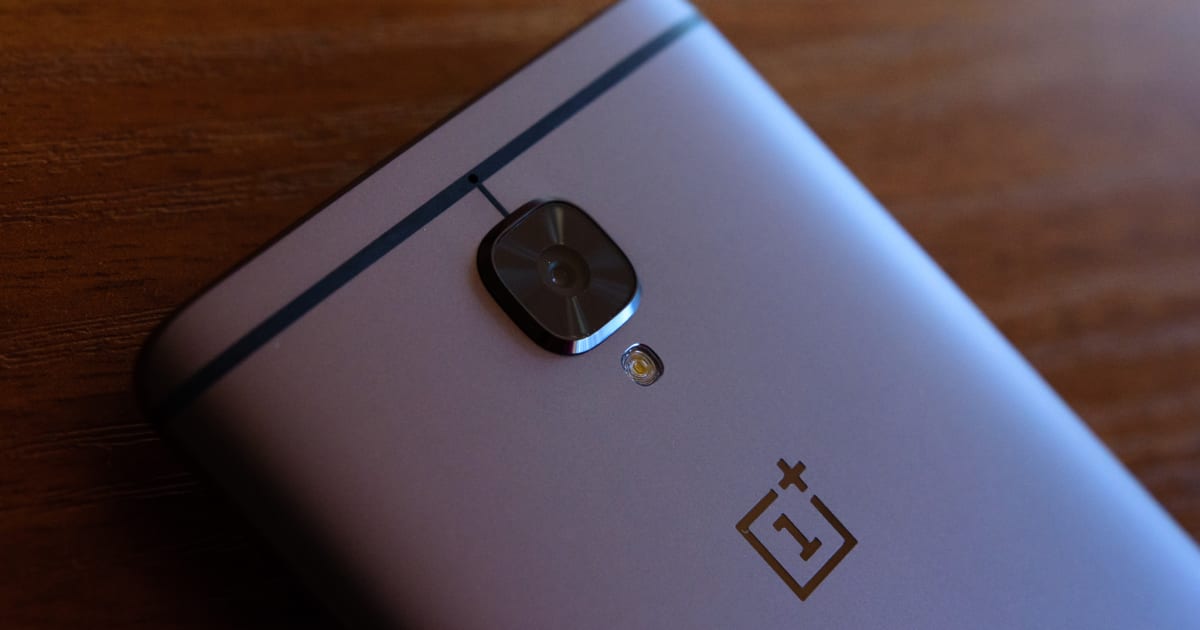
Later this year, OnePlus is expected to unveil one of its most highly anticipated smartphones, the OnePlus 16. Although the device has not yet been officially announced, leaked information and rumors online–not officially confirmed by OnePlus–suggests it could feature some of the most ambitious specifications seen in a modern smartphone. Reported details point to a massive 9,000 mAh battery—nearly double the capacity of most phones on the market, including mine, which are typically no larger than 5,000 mAh—along with top-tier camera hardware and a capable Snapdragon 8 Elite Gen 6 Chip designed for users seeking serious performance.
The device is also expected to be priced between $899 and $999, offering objectively stronger hardware specifications than other smartphones in the same price range, such as the iPhone 17 and Google Pixel 10. Additionally, it is expected to receive a comparable level of software support, though likely slightly less than Apple and Google, as the OnePlus 15 is projected to receive Android security updates for approximately six years following its release, compared to seven to eight years for Apple and Google devices.
Considering these factors and the generally positive reception of previous OnePlus devices, why isn’t nearly everyone—including myself—planning to upgrade to the phone or engaged with its upcoming release?
To me, the answer lies within the smartphone market and its general trends. I’ve noticed that phones from the same company are starting to look more similar, to the point where it can be difficult to tell whether a device is a newer or older model. This trend is especially noticeable with Apple; when looking at the base iPhone 13, 14, and 15, the design appears almost identical, with the primary difference being the color options available.
Not only with looks, but specification differences in smartphone models have typically become less dramatic and more subtle, requiring you to pay close attention to find meaningful differences in daily use of the models you are comparing. You can definitely confirm the differences when consulting official spec sheets, but they usually aren’t prominent enough to noticeably affect daily life usage of the phone.
Besides, even if a smartphone had significant differences in design or specifications, many people don’t see a real need to upgrade their primary device, especially considering the cost of what might be unnecessary improvements. In the case of the OnePlus 16, its predecessor, the OnePlus 15, already offers solid specs, including a 7,300 mAh battery and an older Snapdragon 8 Elite Gen 5 chip, so users satisfied with that phone might find some of the newer model’s ambitious upgrades unnecessary. It’s also worth noting that the OnePlus 15 has downgraded cameras compared to the older OnePlus 13, which could further discourage users of older models from upgrading.
Despite the mixed thoughts of the public regarding newer models of smartphones and the apparent saturation, it's nice to see such innovation from OnePlus continuing to happen. It is one of the main reasons, along with the variety of phones being sold, to why I pay attention to the smartphone industry.
Sources
Băltărețu, Răzvan. “OnePlus 3T.” Flickr, OnePlus 3T | OnePlus 3T product photos | Răzvan Băltărețu | Flickr, 18 Jan. 2017, www.flickr.com/photos/91265124@N03/32410918832/in/photostream/. Accessed 8 Feb. 2026.
Haines, Ryan. “I’m Not Angry at the OnePlus 15, I’m Just Disappointed.” Android Authority, 13 Nov. 2025, www.androidauthority.com/oneplus-15-review-3613994/. Accessed 8 Feb. 2026.
Kumar, Aman. “The OnePlus 16’s Battery Capacity Could Make the OnePlus 15’s 7,300 MAh Huge Battery Look Ordinary.” PhoneArena, 19 Jan. 2026, www.phonearena.com/news/oneplus-16-could-feature-a-9000-mah-battery_id177434. Accessed 8 Feb. 2026.
Lucic, Kristijan. “OnePlus 16 Specs Leak Way ahead of Launch.” Android Headlines, 30 Jan. 2026, www.androidheadlines.com/2026/01/oneplus-16-specs-leak-way-ahead-of-launch.html. Accessed 8 Feb. 2026.
“OnePlus.” Endoflife.date, 11 Jan. 2026, endoflife.date/oneplus. Accessed 8 Feb. 2026.
“OnePlus 15.” OnePlus, 2024, www.oneplus.com/us/15/specs. Accessed 8 Feb. 2026.
Victor. “OnePlus 16 Specs Leak Online.” GSMArena.com, GSMArena, Feb. 2026, www.gsmarena.com/oneplus_16_specs_leak_online-news-71357.php. Accessed 8 Feb. 2026.
Enjoyed this piece? Support the author and share it.
More Stories
The Transition to Autonomous Vehicles
Around the world and increasingly in US cities, autonomous vehicles (AVs) are slowly starting to expand into more and mo...
By Stavro Kakouras
The Newest Shark Vacuum Shines a Light On Dirty Floors
Only a few hours ago, Shark announced the release of its newest robot vacuum. This isn't another regular fully-automatic...
By Stavro Kakouras

The Extended Partnership Between Dell AI and McLaren Racing
In a sport as competitive as F1, driving skills cannot stand alone; the use of advanced technologies is a major driving ...
By Stavro Kakouras