
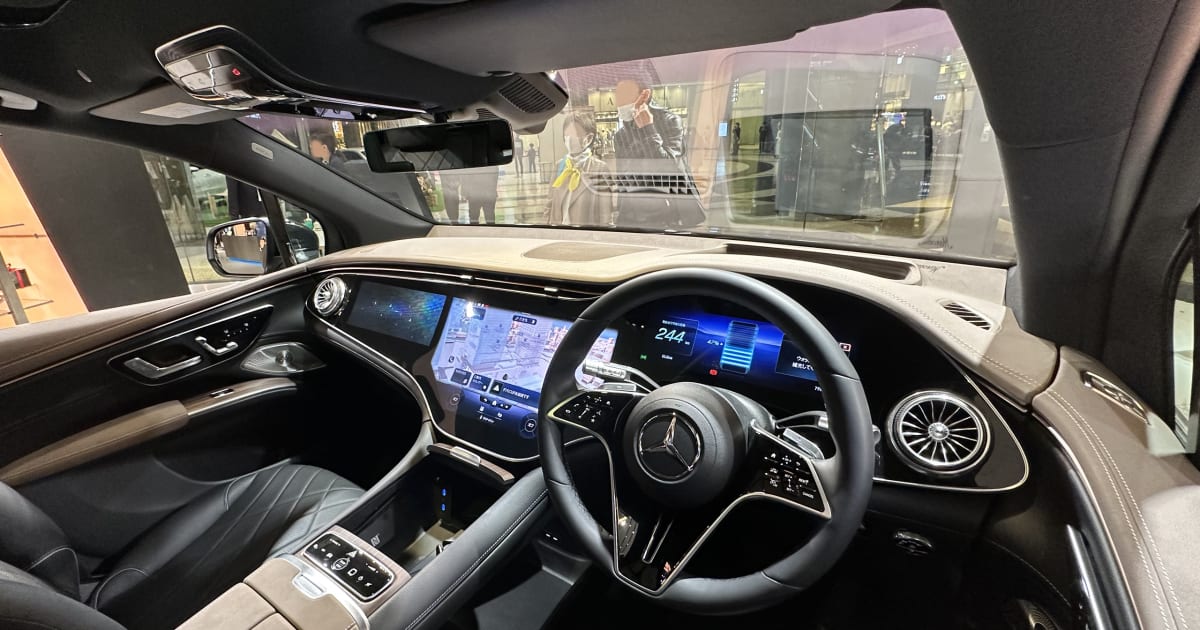
In our rapidly advancing digital and technological world, one area that has seen a massive shift in terms of design is cars. As with so many other things in our lives, cars--and especially car interiors--are also seeing increased usage of technology. However, there are differing opinions about the shift to reliance on digital user interfaces for our current cars.
To many people, the driving engagement of cars is very important. For example, brands like Tesla continue to adopt a streamlined design wherein the amount of physical buttons and knobs is quite scarce. While different people have different viewpoints, many believe that with less physical control also comes less engagement and therefore distraction on the road. An interior with physical buttons keeps the controls in the same accessible place, so the driver can engage their turning signal or change a setting, likely without even having to take their eyes off the road.
Tesla is a perfect case of a completely digitalized user interface. One complaint that customers have is that simple settings that should be easy to configure while driving require multiple taps of the touchscreen. For example, trying to heat the steering wheel requires navigating to "HVAC" and then looking around to find the setting. Moreover, Tesla has taken an all-digital approach to shifting gears (P, R, D, etc.), which some believe could cause the driver to lose focus if trying to complete, say, a three-point turn. If the driver prefers shifting gears with physical buttons, they do have the option to use buttons located on an overhead console, but that can be awkward.
A few years back, Tesla repositioned the turn-signal indicators to the steering wheel, eliminating any physical stalks behind the steering wheel at the time. While some said the change aligned with Tesla's streamlined approach, others felt it did not make sense to place the indicators as buttons on a moving steering wheel. However, after complaints from customers, Tesla made turning stalks standard in China last year, and offered them an option in the US.
With many different companies working to advance their digital user interfaces, customers opposed to this digital setup argue that the feeling of pushing a button is less distracting than swiping on a screen. However, to advance in this digital society, innovation is key.
Mercedes-Benz is an example of a company that has plans to greatly enhance the ways their cars interact with customers through generative AI. For example, Mercedes-Benz has plans to incorporate Unity's game engine into a feature they are calling Surround Navigation: a system that will use 3D graphics to create an immersive GPS and driver assistance combination. Mercedes-Benz will also adopt Sony Pictures Entertainment's RIDEVU service to elevate the entertainment in their cars.
The adoption of new technologies into cars in this day and age comes with pros and cons, with the benefits or drawbacks really coming down to different people and perspectives. With the huge capabilities of current software, it can be easy to pack a lot of features into driver assistance technology. Regrettably, that comes with the cost of neglecting other aspects, like driver focus and engagement on the road, which cannot be ignored.
Sources
Crisara, Matt. “Touch Screens Are Making Cars Worse. It’s Time to Bring Back Buttons and Knobs.”
Popular Mechanics, 25 Apr. 2025, www.popularmechanics.com/cars/car-technology/a64543699/touch-screens-making-cars-worse/.
Guthrie, Susannah. ““Completely Stupid”: Tesla’s Controversial New Gear Shifter and Indicators.” Drive, 14 Sept. 2023, www.drive.com.au/caradvice/2024-tesla-model-3-gear-shifter-indicators/.
Iulian Dnistran. “Tesla Is Bringing Back the Turn Signal Stalk for the Model 3.” InsideEVs, 19 Aug. 2025, insideevs.com/news/769401/tesla-turn-signal-stalk-model-3/.
“Mercedes-Benz Heralds a New Era for the User Interface with Human-like Virtual Assistant Powered by Generative AI.” MBUSA Newsroom, 9 Jan. 2024, media.mbusa.com/releases/release-ebe78e1e0abb0f8a2f173a4032054126-mercedes-benz-heralds-a-new-era-for-the-user-interface-with-human-like-virtual-assistant-powered-by-generative-ai.
“Model 3 Turn Signal Stalk Retrofit.” Tesla.com, shop.tesla.com/product/model-3-turn-signal-stalk-retrofit.“Shifting.” Tesla.com, www.tesla.com/ownersmanual/modely/en_eu/GUID-E9B387D7-AFEF-4AAF-8685-4FE71E09287D.html.
“Tesla Is an AWFUL Software Company.” Tesla Motors Club, 18 Sept. 2021, teslamotorsclub.com/tmc/threads/tesla-is-an-awful-software-company.240589/.
“Tesla: Example of Crazy Bad User Interface? - Philip Greenspun’s Weblog.” Philip Greenspun’s Weblog, 18 June 2018, philip.greenspun.com/blog/2018/06/18/tesla-example-of-crazy-bad-user-interface/.
Wong, Ethan. “A Deep Dive into Tesla’s User Interface.” Medium, 9 Mar. 2024, medium.com/@ethanwwm/a-deep-dive-into-teslas-user-interface-9c4aa3e6a4ab.
Enjoyed this piece? Support the author and share it.
More Stories
The Transition to Autonomous Vehicles
Around the world and increasingly in US cities, autonomous vehicles (AVs) are slowly starting to expand into more and mo...
By Stavro Kakouras
The Extended Partnership Between Dell AI and McLaren Racing
In a sport as competitive as F1, driving skills cannot stand alone; the use of advanced technologies is a major driving ...
By Stavro Kakouras

6G is Around the Corner: The Next Step for Cellular Advancements
The next step for cellular technology, 6G, is upon us. There are many promises that the technology brings with it, and i...
By Stavro Kakouras