
Over the course of the last two decades, most common consumer electronics have shown a general decline in their repairability, with later models being less repairable than their earlier counterparts. Devices that were once easy to repair eventually became much harder and more expensive to fix than earlier models.
The iPhone is a notable example of this trend. Earlier, more repairable models were favored by technicians because broken parts could be replaced quickly without losing functionality. Over time, however, more software-related restrictions began to appear after repairs. Features including True Tone on replacement screens were often lost, and camera functionality became limited. This happened because the original parts were digitally paired to the phone through software. When those parts were replaced, the new components didn’t have that pairing, so they had reduced functionality. The iPhone would warn users that the replaced parts were not genuine, with reduced functionality for features that utilize those parts to work. Even using replacement parts from another iPhone of the same model could not circumvent the issue.
While recalibrating replacement parts could restore performance, the calibration process itself sometimes had issues. Apple’s Repair Assistant, a software tool used to calibrate replaced components so they function properly with iPhones, still has limitations when restoring full functionality to devices using third-party components. Additionally, iFixit reported inconsistent repair outcomes, with the same repair on different iPhones resulting in varying levels of functionality.
While iPhones are a prominent example of declining repairability, the trend is apparent across other electronic devices. Laptops from the early 2000s featured more modular components, wherein users could replace outdated and/or broken parts with newer ones and address issues such as lag and slow performance. This design made it convenient even for users without technical experience to upgrade or repair their devices. For instance, the 2006 Lenovo ThinkPad T60 featured a removable external battery, a CPU accessible via unscrewing, up to 4 GB of user-installable RAM, and a 2.5-inch hard drive slot that could accommodate an SSD, along with other upgrades enabled by its modular design. With these upgrades, the T60 can even run Windows 10. However, ThinkPads nowadays feature more parts soldered to the motherboard, so such modifications such as upgrading the CPU & RAM can require replacing the entire motherboard, a more arduous job. Even replacing the battery—which did not require any tools on the T60—requires unscrewing the laptop to access its internals; it is feasible, yet longer.
Soldering vital parts—including the CPU, RAM, and SSD—to the motherboard can enhance performance by promoting quicker and more efficient communication between parts, even while it decreases repairability. This is due to shorter, more optimized electrical pathways and tighter system integration, rather than delays caused by connectors. Production costs are also reduced, so consumers buy less expensive laptops. Laptops, notably MacBooks, are made more sleek & thin via soldering components, which benefits portability.
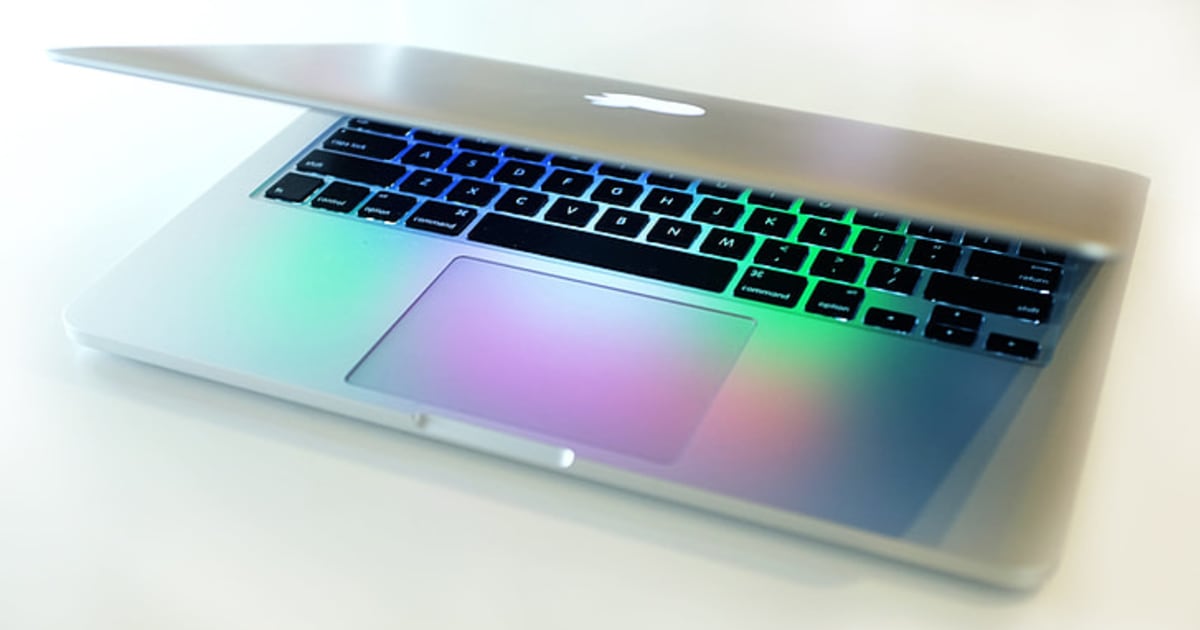
Meanwhile, Apple’s new laptop—The MacBook Neo—released earlier this month. While it lacks the level of modularity and reparability of older laptops, the modifications Apple has made to this laptop’s reparability make it stand out in the crowd of computers, chiefly other Macbooks. For example, the battery can now be removed—without encountering adhesives that overcomplicate the process—only by unscrewing. By contrast, most MacBook models use adhesive to secure the battery in place. Although some models include stretch-release adhesive strips, these often break during removal, requiring the battery to be carefully pried out using a solvent to loosen the adhesive. In models without these strips, a solvent such as isopropyl alcohol is necessary from the start to safely remove the battery. In the MacBook Neo, Apple has labeled all the screw types used on the removable battery to assist those involved in repairing the device. Furthermore, in contrast to other MacBook models, the keyboard can be separated from the top case—after removing 41 screws and peeling back adhesive and tape—allowing it to be repaired independently. Apple’s notorious parts pairing—despised by many—is not included with the Macbook Neo.
While some key components are still soldered to the motherboard, making hardware upgrades nearly impossible, the changes made to this MacBook significantly improve its repairability. Compared to laptops from other companies—which often rely heavily on adhesive and numerous screws and do not provide easy access to key components—this design is much easier to service. One possible reason for this MacBook’s more modular design compared to other models is that the MacBook is aimed at the educational market, full of students who don’t yet know how to handle a laptop and would likely damage it. As a result, repairability is essential to ensure the MacBook continues to function properly. Another key reason is the new EU regulations for serviceability that the Neo has been designed to comply with.
The MacBook Neo is a notable example of a company—well known for opposing the right to repair—producing a product with greater user serviceability than it is typically associated with. This demonstrates that even companies initially against the right to repair can support it and contribute to the reduction of e-waste, along with the environmental and societal benefits that come from prioritizing repairability. It highlights the value of pressure and advocacy on companies to make more repairable products, in ways such as enacting legislation that dismantles serviceability limitations put in place by companies.
Given Apple’s influence in the laptop industry, the company could also set a trend for more repairable laptops, which other companies might follow to meet consumer demand and boost sales. This would be a key step towards better serviceability, but given how new the MacBook Neo is, whether it will cause a trend of more repairable laptops on the market cannot be determined yet. It is certain, however, that people repairing devices will be eager for that trend.
Sources
Apple Support. “Use Repair Assistant to Finish an IPhone or IPad Repair - Apple Support.” Apple Support, 10 Mar. 2026, support.apple.com/en-us/120579. Accessed 20 Mar. 2026.
Chamberlain, Elizabeth. “MacBook Neo Is the Most Repairable MacBook in 14 Years.” IFixit, 13 Mar. 2026, www.ifixit.com/News/116152/macbook-neo-is-the-most-repairable-macbook-in-14-years. Accessed 20 Mar. 2026.
Dixon, Taylor. “P5 Pentalobe Screwdriver Retina MacBook pro and Air.” IFixit, ifixit, 8 Nov. 2018, www.ifixit.com/Teardown/MacBook+Air+13-Inch+Retina+2018+Teardown/115201. Accessed 20 Mar. 2026.
Epictronics. “IBM Thinkpad T60 Upgrade, CPU, DDR, SSD, and Windows 10 for Daily Work!” YouTube, 13 July 2020, www.youtube.com/watch?v=5hvkQTKpdbc. Accessed 20 Mar. 2026.
Ha, Anthony. “The MacBook Neo Is ‘the Most Repairable MacBook’ in Years, according to IFixit | TechCrunch.” TechCrunch, 16 Mar. 2026, techcrunch.com/2026/03/16/macbook-neo-ifixit-most-repairable-macbook-in-years-battery-replacement/. Accessed 20 Mar. 2026.
Jeffreys, Hugh. “Apples New ‘Repair Assistant’ Lets You Pair Parts + 3rd Party Battery Health Data Unlocked.” YouTube, 26 Oct. 2024, www.youtube.com/watch?v=RB0GwRwZTJM. Accessed 20 Mar. 2026.
Lenovo Support. “Detailed Specifications - ThinkPad T60, T60p - Lenovo Support US.” Lenovo.com, 28 May 2015, support.lenovo.com/us/en/solutions/pd008795-detailed-specifications-thinkpad-t60-t60p. Accessed 20 Mar. 2026.
techgurl. “Lenovo #ThinkPad T490 Internal Battery Replacement.” YouTube, 26 Feb. 2021, www.youtube.com/watch?v=jaDDNLqAXh8. Accessed 20 Mar. 2026.
Wiens, Kyle. “We Are Retroactively Dropping the IPhone’s Repairability Score | IFixit News.” IFixit, 20 Sept. 2023, www.ifixit.com/News/82493/we-are-retroactively-dropping-the-iphones-repairability-score-en. Accessed 20 Mar. 2026.
Enjoyed this piece? Support the author and share it.
More Stories
The Transition to Autonomous Vehicles
Around the world and increasingly in US cities, autonomous vehicles (AVs) are slowly starting to expand into more and mo...
By Stavro Kakouras
The Newest Shark Vacuum Shines a Light On Dirty Floors
Only a few hours ago, Shark announced the release of its newest robot vacuum. This isn't another regular fully-automatic...
By Stavro Kakouras
The Extended Partnership Between Dell AI and McLaren Racing
In a sport as competitive as F1, driving skills cannot stand alone; the use of advanced technologies is a major driving ...
By Stavro Kakouras