
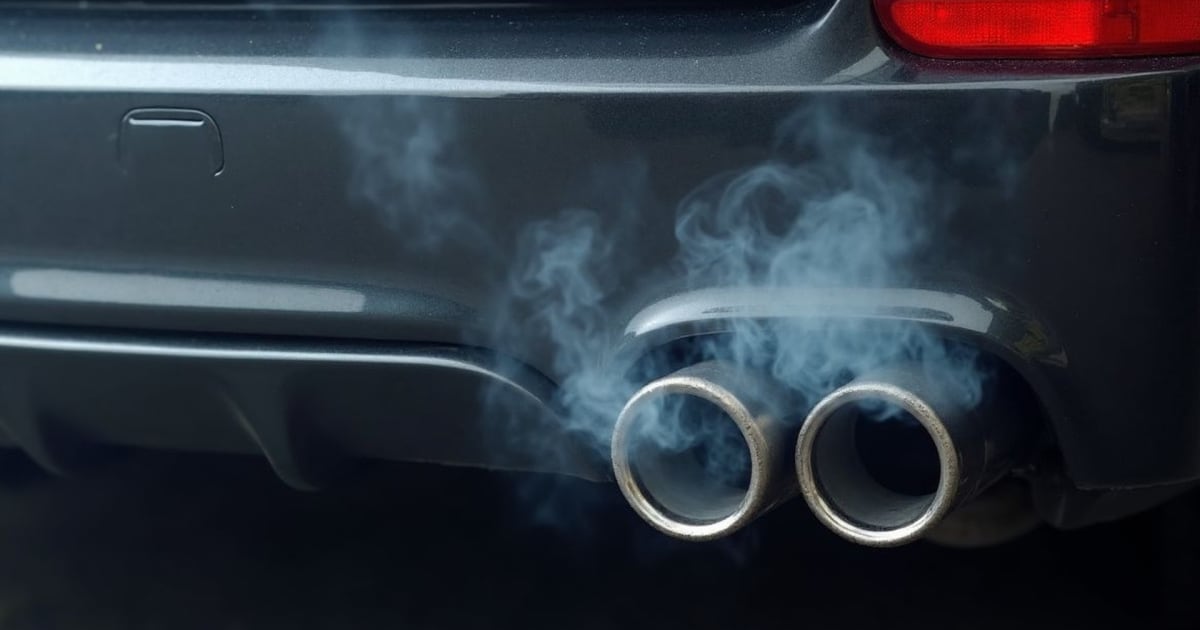
Earlier this month, the current Trump administration announced and carried out the repeal of a key EPA (Environmental Protection Agency) decision. Originating from the outcome of the 2007 court case Massachusetts v. EPA, the Endangerment Finding is a legal determination made by the EPA regarding the regulation of greenhouse gases and their impact on climate change. In 2009, the EPA identified six greenhouse gases—carbon dioxide, methane, nitrous oxide, hydrofluorocarbons, perfluorocarbons, and sulfur hexafluoride—as posing a danger to public health based on scientific evidence. This determination provided the basis for regulating the release of these gases and other related emissions under the Endangerment Finding, formally titled The Endangerment and Cause or Contribute Findings for Greenhouse Gases Under Section 202(a) of the Clean Air Act, one of the nation’s most influential laws for regulating air pollution.
While not a rule or law itself, it has provided the legal justification for later regulations that limit harmful emissions released into the atmosphere and has played a key role in efforts to combat global warming. The EPA formally recognized the impact of these pollutants on air quality and public health, focusing on six major ones to support the development of standards to control them. For example, automobile manufacturers and factories have faced stricter requirements that hold them accountable by specifically regulating their greenhouse gas emissions.
Now, the Trump administration, along with EPA Administrator Lee Zeldin, is facilitating the repeal of the landmark Endangerment Finding. The EPA currently argues that it did not have the legal authority to issue a determination that allowed it to regulate emissions in the manner it had been doing. According to the administration, the creation of the Finding and the regulations that followed resulted in over $1.3 trillion in compliance costs, including expenses for automobile manufacturers and other regulatory programs aimed at reducing emissions. They also contend that even eliminating all U.S. vehicle emissions under rules established because of the Finding would not produce any meaningful reduction in overall atmospheric levels. In their view, responsibility for regulating these pollutants should shift more toward Congress and the presidential administration rather than federal agencies like the EPA, which they argue should adhere more closely to the original Clean Air Act of the 1970s.
Given current concerns about climate conditions, the repeal of the Finding can be viewed by some as a step backward in environmental policy. Many argue that addressing climate change should remain a priority, even if doing so involves economic trade-offs. Some policy proposals suggest that financial burdens associated with emissions reductions could be structured to place a greater share on higher-income groups in order to reduce disproportionate impacts on lower-income communities. Supporters of the Finding maintain that a stable climate is closely connected to long-term public health, environmental protection, and economic stability. They also emphasize that the scientific research examining the effects of these gases continues to inform understanding of their potential impact on human health and the environment.
Sources
Bobek Ltd. “Car Exhaust Exhaust Gases Free Stock Photo - Public Domain Pictures.” Publicdomainpictures.net, www.publicdomainpictures.net/en/view-image.php?image=705227&picture=car-exhaust-exhaust-gases. Accessed 15 Feb. 2026.
EPA Press Office. “President Trump and Administrator Zeldin Deliver Single Largest Deregulatory Action in U.S. History | US EPA.” US EPA, 12 Feb. 2026, www.epa.gov/newsreleases/president-trump-and-administrator-zeldin-deliver-single-largest-deregulatory-action-us#. Accessed 15 Feb. 2026.
Garrison, Joey. “Trump Repeals Landmark EPA Climate Finding. Here’s What to Know.” USA TODAY, 12 Feb. 2026, www.usatoday.com/story/news/politics/2026/02/12/trump-repeals-landmark-epa-climate-finding/88641826007/. Accessed 15 Feb. 2026.
Jordan, Rob. “EPA ‘endangerment finding’ explained: 5 facts about the science and health risks.” Stanford Woods Institute for the Environment, Stanford University, 18 Sept. 2025, woods.stanford.edu/news/epa-endangerment-finding-explained-5-facts-about-science-and-health-risks. Accessed 15 Feb. 2026.
US EPA. “Summary of the Clean Air Act.” US EPA, 31 July 2024, www.epa.gov/laws-regulations/summary-clean-air-act. Accessed 15 Feb. 2026.
Enjoyed this piece? Support the author and share it.
More Stories
The Hidden Emissions from EV Batteries
Many believe that electric cars (EVs) are better for the environment because they do not burn gasoline and release pollu...
By Stavro Kakouras

The Transition to Autonomous Vehicles
Around the world and increasingly in US cities, autonomous vehicles (AVs) are slowly starting to expand into more and mo...
By Stavro Kakouras

The Newest Shark Vacuum Shines a Light On Dirty Floors
Only a few hours ago, Shark announced the release of its newest robot vacuum. This isn't another regular fully-automatic...
By Stavro Kakouras